04 Vadose Zone Physics
04-05 Infiltration
Infiltration processes and modeling approaches, infiltration capacity, infiltration front progression, and surface–subsurface exchange.
Contents
| Index | Description |
|---|---|
| 04-05-001 | Green-Ampt-Model for Infiltration - Intro |
| 04-05-002 | Horton Infiltration Introduction |
04-05-001Green-Ampt-Model for Infiltration - Intro
| Type: Streamlit app | Time: 15–30 minutes |
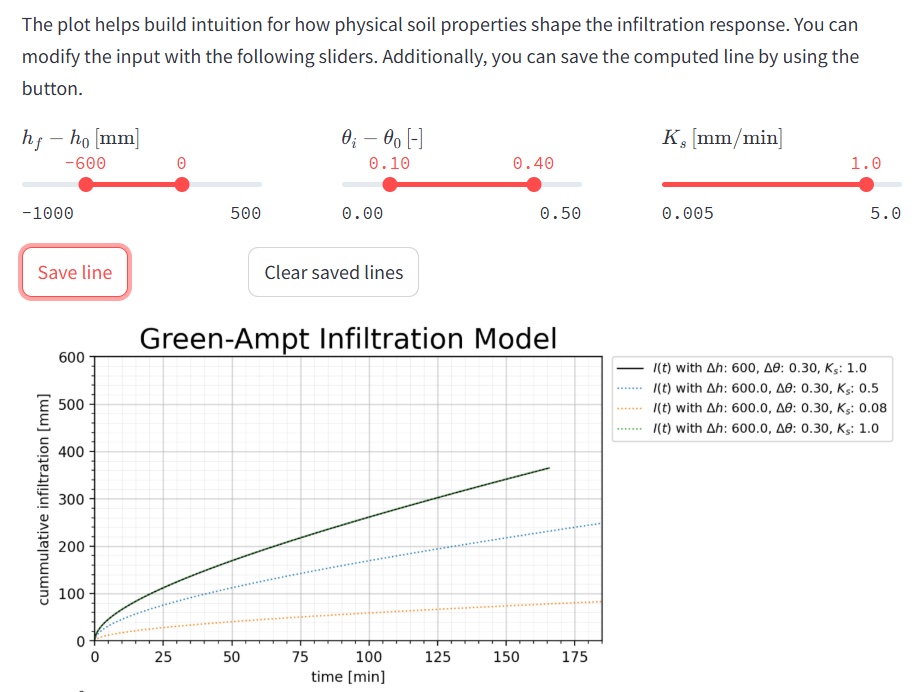
Figure 1: The app with the interactive plot (Screenshot)
Green–Ampt Model for Infiltration is an interactive learning app that introduces the Green–Ampt infiltration concept for ponded conditions and soil wetting-front dynamics. The app combines a concise theoretical explanation (including typical parameter ranges and example experimental context such as double-ring infiltrometers) with an exploratory workflow where users adjust the key model controls—saturated hydraulic conductivity Kₛ, water-content contrast Δθ, and head difference Δh—to investigate their influence on cumulative infiltration I(t) and infiltration rate i(t) over time.
Two linked plots (linear for I(t) and logarithmic for i(t)) support interpretation of early-time suction-driven behavior and long-time convergence toward Kₛ. Users can save multiple parameter sets and overlay them in the same figure to compare scenarios and build intuition for how soil properties and initial conditions shape infiltration responses. The app includes an initial assessment (to check prior knowledge) and a final assessment (to self-check learning gains), making it suitable for self-study, blended learning, and introductory teaching before progressing to more advanced unsaturated-zone approaches (e.g., Richards equation or van Genuchten–Mualem).
| Detail | Value |
|---|---|
| URL | green-ampt-intro.streamlit.… · open app |
| Author(s) | Steffen Birk (Department of Earth Sciences, University of Graz); Edith Grießer (Department of Earth Sciences, University of Graz); Matthias Hausleber (Department of Earth Sciences, University of Graz); Thomas Reimann (Institute for Groundwater Management, TU Dresden) |
| Keywords | Unsaturated zone, infiltration, field experiments |
| Fit For | self learning, online teaching, classroom teaching |
| Prerequisites | soil properties, soil types, basic hydrogeology |
Streamlit app details
| Detail | Value |
|---|---|
| Interactive plots | 2 interactive plot(s) |
| Assessments included | 8 question(s) |
04-05-002Horton Infiltration Introduction
| Type: Streamlit app | Time: 15–30 minutes |
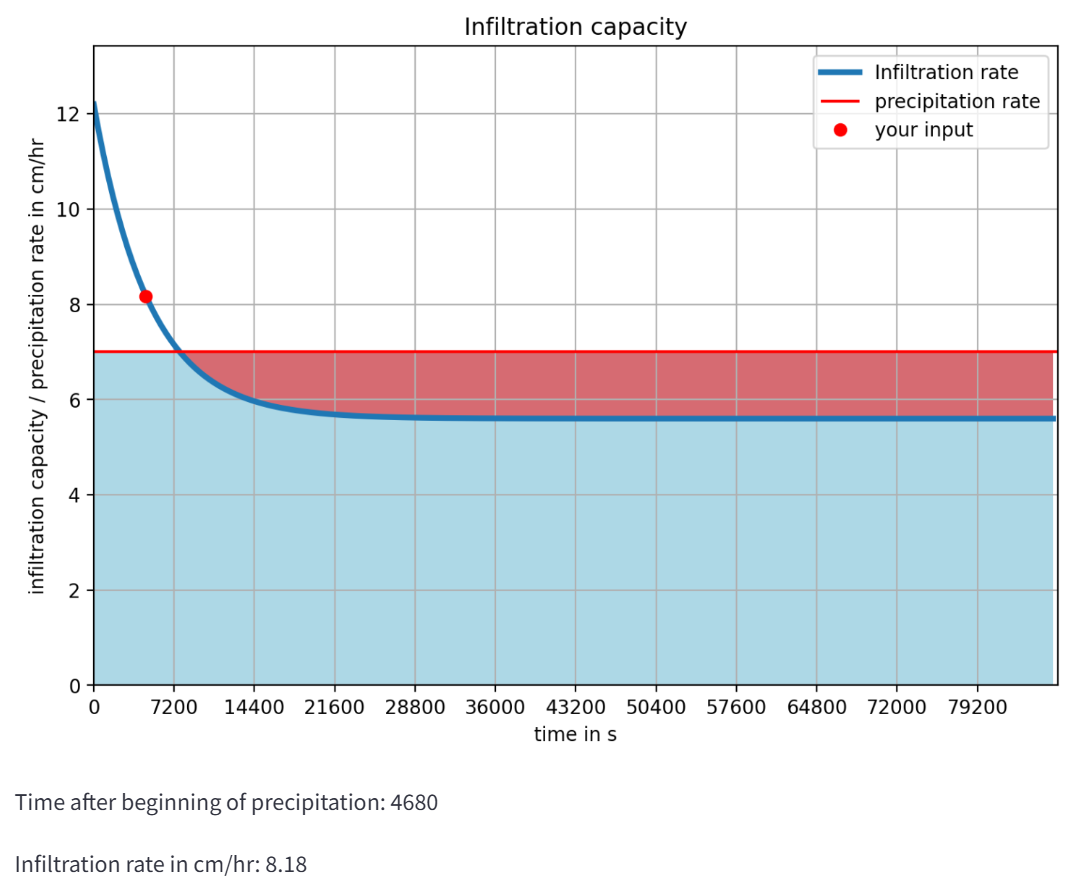
Figure 1: The interactive plot with Horton infiltration. (Screenshot)
This interactive application illustrates the Horton infiltration model and its role in explaining infiltration-excess (Hortonian) overland flow during intense rainfall events. Users explore how infiltration capacity decreases over time from an initial value toward an equilibrium rate and how this behavior controls the partitioning of rainfall into infiltration and surface runoff.
The app allows interactive modification of the key Horton parameters—initial infiltration capacity f_0, equilibrium infiltration capacity fc, and decay constant k, as well as rainfall intensity. The resulting time evolution of infiltration capacity is visualized and compared with precipitation, enabling users to identify conditions under which overland flow occurs.
Integrated initial and final assessment questions support self-learning and conceptual understanding. The application is suitable for undergraduate and graduate teaching, self-study, and professional training, providing an intuitive introduction to infiltration processes in basic hydrology.
| Detail | Value |
|---|---|
| URL | horton-infiltration-intro.s… · open app |
| Author(s) | Markus Giese (University of Gothenburg); Thomas Reimann (TU Dresden) |
| Keywords | Infiltration, unsaturated zone |
| Fit For | self learning, classroom teaching, online teaching, exam preparation |
| Prerequisites | Basic hydrology, basic hydrogeology |
Streamlit app details
| Detail | Value |
|---|---|
| Interactive plots | 1 interactive plot(s) |
| Assessments included | 8 question(s) |