03 Basic Hydrogeology
03-05 Flow to Wells
Radial flow principles, well hydraulics, analytical well-flow solutions (Thiem, Theis, Cooper–Jacob), Dupuit-Forchheimer assumption, drawdown behavior.
Contents
03-05-001Steady-State Flow to a Well in a Confined Aquifer - Drawdown with the Thiem equation
| Type: Streamlit app | Time: 5–15 min |
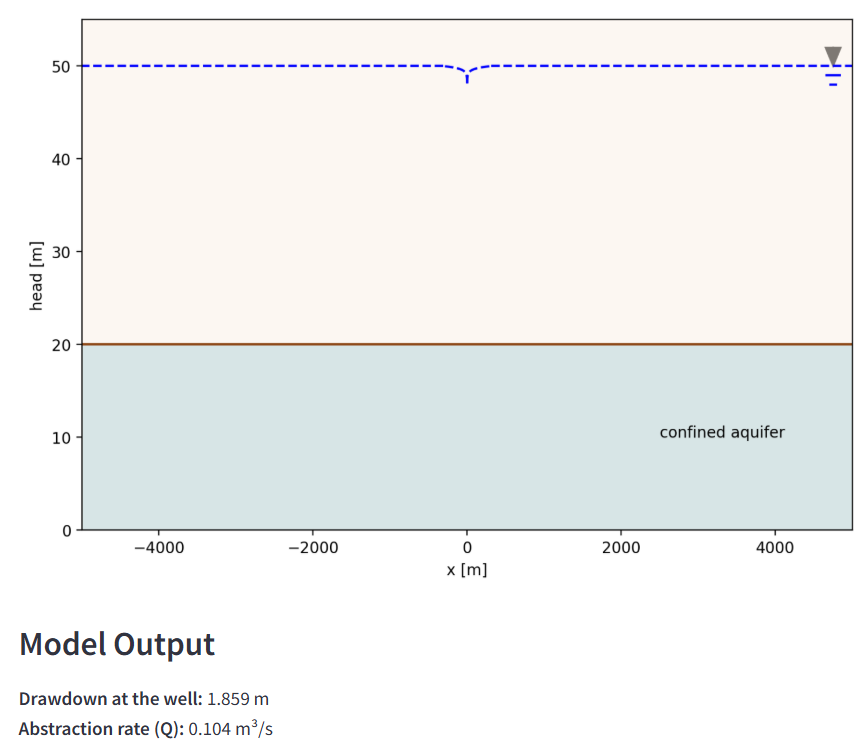
Figure 1: The interactive plot with the computed drawdown (Screenshot)
This Streamlit app is an interactive learning tool for steady-state radial flow to a pumping well in a confined aquifer using the Thiem equation. Users explore how aquifer properties and well characteristics control the drawdown curve and the pumping rate required to achieve a target drawdown.
The interface provides sliders for key parameters: the unaffected hydraulic head (H), aquifer thickness (m), and hydraulic conductivity (K, adjusted on a log scale), as well as the well radius (rₙ). A toggle lets users choose between two modes: (i) prescribe a drawdown at the well and compute the corresponding abstraction rate Q, or (ii) prescribe Q and compute the resulting head distribution.
Based on the selected parameters, the app iteratively determines an effective radius of influence (R) and then calculates the hydraulic head h(r) from the Thiem solution. The resulting drawdown profile is plotted symmetrically around the well to visualize the cone of depression and its spatial extent. If parameters imply that the computed head drops below the aquifer thickness (indicating a transition toward unconfined conditions), the app flags this with a clear warning in the plot.
A compact output panel summarizes the drawdown at the well and the computed abstraction rate, supporting quick interpretation and “what-if” experimentation. Overall, the app helps students and practitioners build intuition for confined well hydraulics and parameter sensitivity in a transparent, hands-on way.
| Detail | Value |
|---|---|
| URL | flow2well-thiem-confined.st… · open app |
| Author(s) | Thomas Reimann (TU Dresden) |
| Keywords | Wells, steady-state, dewatering, Thiem equation, flow to wells |
| Fit For | self learning, classroom teaching, online teaching |
| Prerequisites | Basic hydrogeology |
Streamlit app details
| Detail | Value |
|---|---|
| Interactive plots | 1 interactive plot(s) |
03-05-002Steady-State Flow to Multiple Wells in a Confined Aquifer - Thiem Equation & Superposition
| Type: Streamlit app | Time: 15–30 minutes |
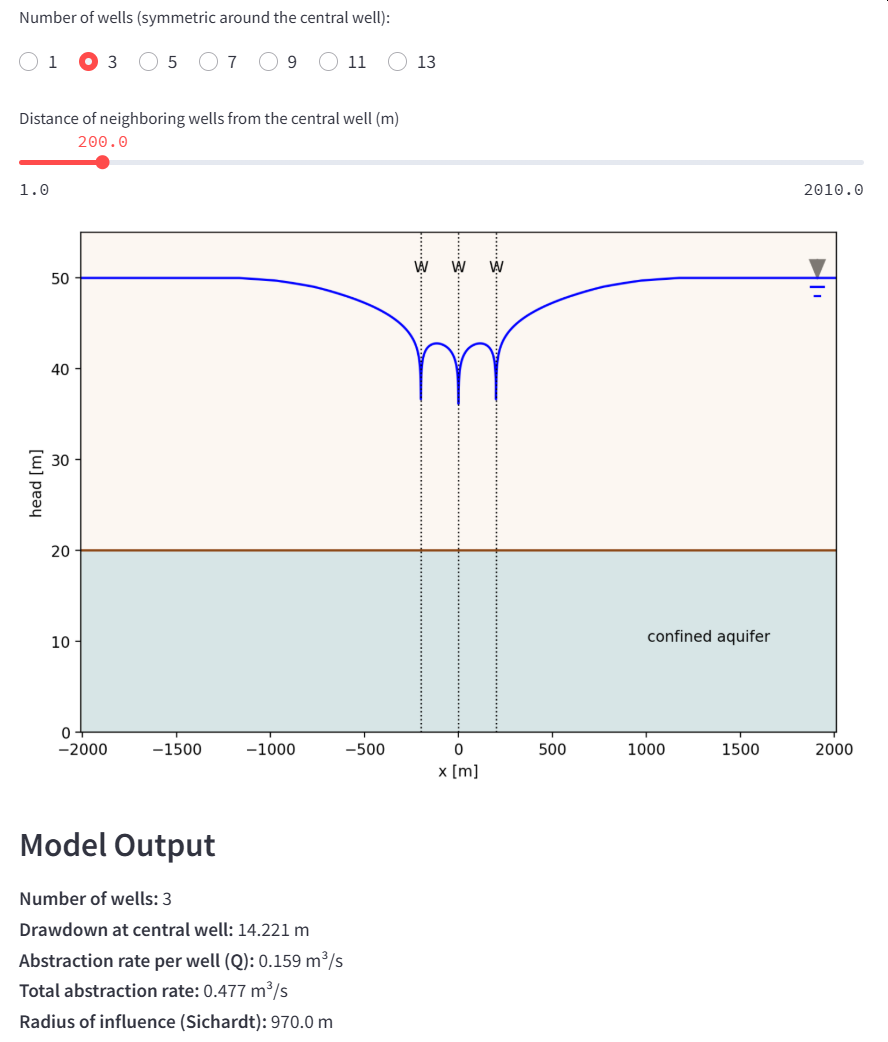
Figure 1: The plot shows the resulting drawdown according to Thiems equation for three wells. (Screenshot)
This Streamlit app illustrates steady-state flow to multiple pumping wells in a confined aquifer using the Thiem equation and the principle of superposition. It is designed to support conceptual understanding of well interference and its dependence on aquifer properties, well spacing, and pumping rates.
Users adjust key aquifer parameters (unaffected head H, aquifer thickness m, hydraulic conductivity K on a logarithmic scale) and well characteristics (well radius). Two complementary modes are available: prescribing a drawdown at the well to compute the required pumping rate per well, or prescribing a pumping rate to compute the resulting head distribution. The number of wells (1–13) is selected symmetrically around a central well, together with the spacing between neighboring wells.
The app estimates a radius of influence and computes the head distribution along a 1D transect through the well field. Drawdown contributions from all wells are summed by superposition, clearly visualizing overlapping cones of depression and increasing interference with decreasing well spacing. Parameter combinations that imply a transition toward unconfined conditions are flagged directly in the plot.
A compact output section reports the drawdown at the central well, the abstraction rate per well, the total abstraction rate, and the estimated radius of influence, making the app suitable for both teaching and exploratory well-field analysis.
| Detail | Value |
|---|---|
| URL | flow2well-thiem-confined-su… · open app |
| Author(s) | Thomas Reimann (TU Dresden) |
| Keywords | Wells, steady-state, dewatering, Thiem equation, flow to wells |
| Fit For | self learning, classroom teaching, online teaching |
| Prerequisites | Basic hydrogeology |
Streamlit app details
| Detail | Value |
|---|---|
| Interactive plots | 1 interactive plot(s) |
03-05-003Steady-State Flow to a Well in an Unconfined Aquifer - Drawdown with the Thiem equation
| Type: Streamlit app | Time: 5–15 min |
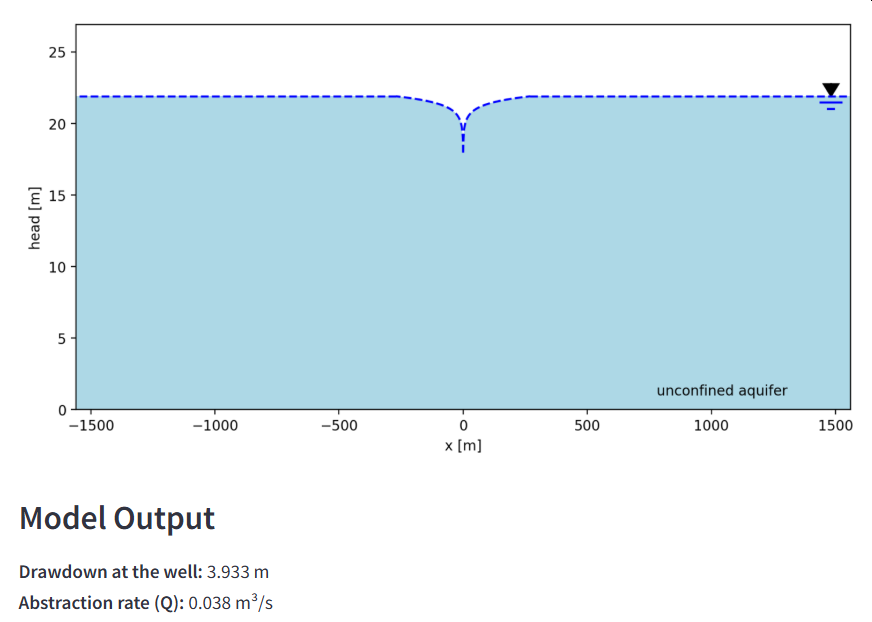
Figure 1: The drawdown in an unconfined aquifer, computed with Thiem's equation. (Screenshot)
This interactive app demonstrates steady-state radial flow to a pumping well in an unconfined aquifer using the Thiem (Dupuit–Thiem) equation. Users explore how hydraulic conductivity (log-scaled), initial water-table elevation, and well radius control the drawdown cone and the abstraction rate.
Two usage modes are provided:
- Specify drawdown (s): the app computes the corresponding pumping rate (Q) and an influence radius (R) (Sichardt-type estimate).
- Specify pumping rate (Q): the app iteratively determines well water level (h_w) and radius of influence (R), and flags conditions where the well may run dry (no feasible steady-state solution). The resulting water-table profile h(r) is plotted symmetrically around the well, including the unaffected head outside the influence radius. Key outputs (drawdown at the well and pumping rate) are reported to support conceptual understanding and sensitivity exploration.
| Detail | Value |
|---|---|
| URL | flow2well-thiem-unconfined.… · open app |
| Author(s) | Thomas Reimann (TU Dresden) |
| Keywords | Wells, steady-state, dewatering, Thiem equation, flow to wells |
| Fit For | self learning, classroom teaching, online teaching |
| Prerequisites | Basic hydrogeology |
Streamlit app details
| Detail | Value |
|---|---|
| Interactive plots | 1 interactive plot(s) |
03-05-004Steady-State Flow to Multiple Wells in an Unconfined Aquifer - Thiem Equation & Superposition
| Type: Streamlit app | Time: 15–30 minutes |
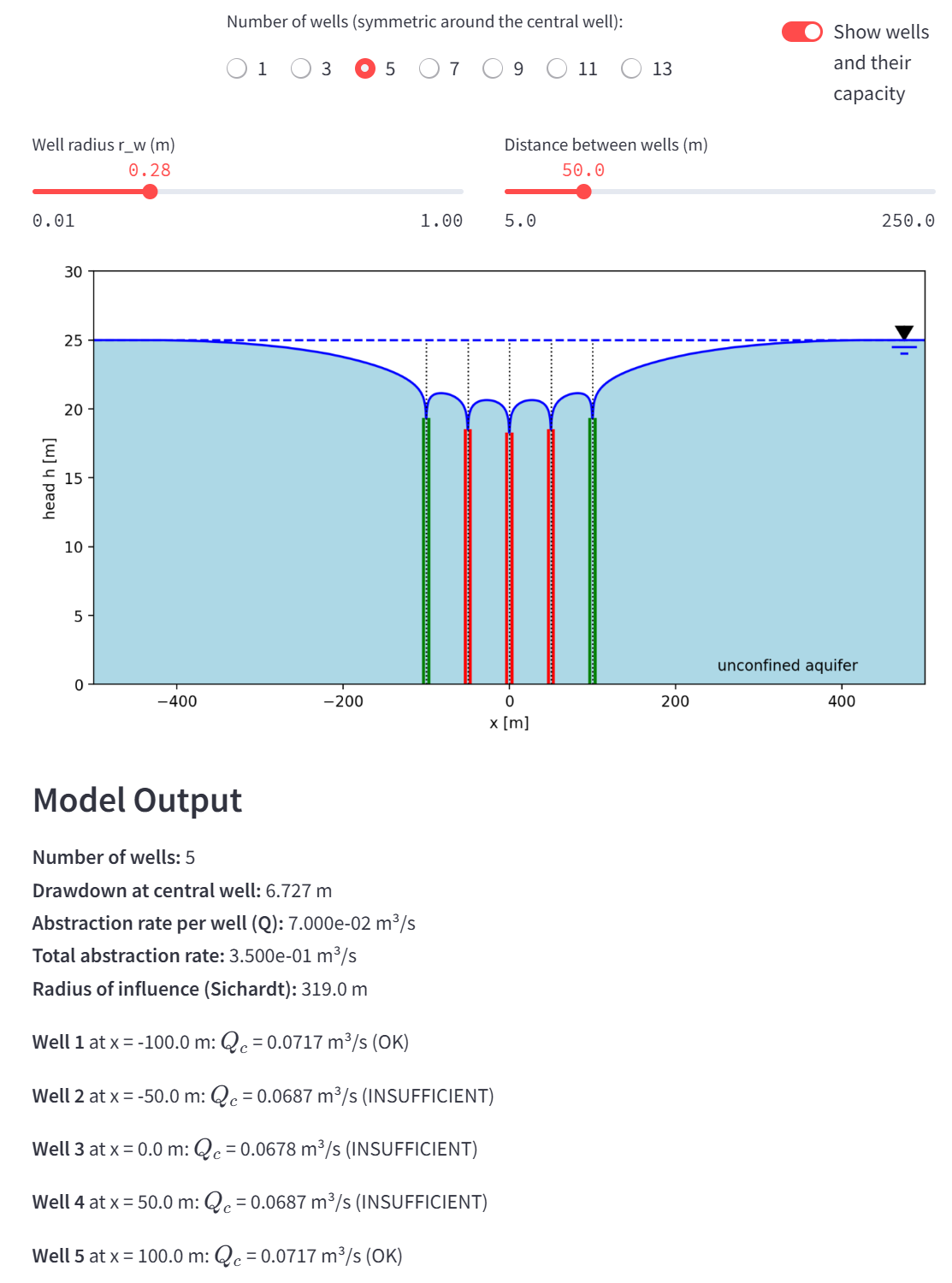
Figure 1: The drawdown in an unconfined aquifer with 5 pumping wells. (Screenshot)
This interactive app illustrates steady-state groundwater flow to multiple pumping wells in an unconfined aquifer using the Dupuit–Thiem equation combined with the principle of superposition. A symmetric well field (1–13 wells) is arranged along a line, allowing users to explore how well spacing, number of wells, hydraulic conductivity (log-scaled), and initial water-table elevation jointly control the resulting drawdown pattern.
Users may either specify the abstraction rate per well (Q) or prescribe a drawdown at the central well, from which the corresponding pumping rate is derived. The app computes the radius of influence (Sichardt) and evaluates the combined drawdown by superposing the contributions of all wells, consistent with unconfined Thiem theory.
Optional visualization features include:
- Display of individual well positions and local heads,
- A capacity check comparing pumping rate with a Sichardt-based well capacity,
- Representation of a construction pit intersecting the groundwater table.
Key outputs include drawdown at the central well, per-well and total abstraction rates, and well-specific capacity indicators, supporting conceptual understanding of well interference, field design, and sustainability limits in unconfined aquifers.
| Detail | Value |
|---|---|
| URL | flow2well-thiem-unconfined-… · open app |
| Author(s) | Thomas Reimann (TU Dresden) |
| Keywords | Wells, steady-state, dewatering, Thiem equation, flow to wells |
| Fit For | self learning, classroom teaching, online teaching |
| Prerequisites | Basic hydrogeology |
Streamlit app details
| Detail | Value |
|---|---|
| Interactive plots | 1 interactive plot(s) |
03-05-005Transient Flow towards a well in a confined aquifer
| Type: Streamlit app | Time: 5–15 min |
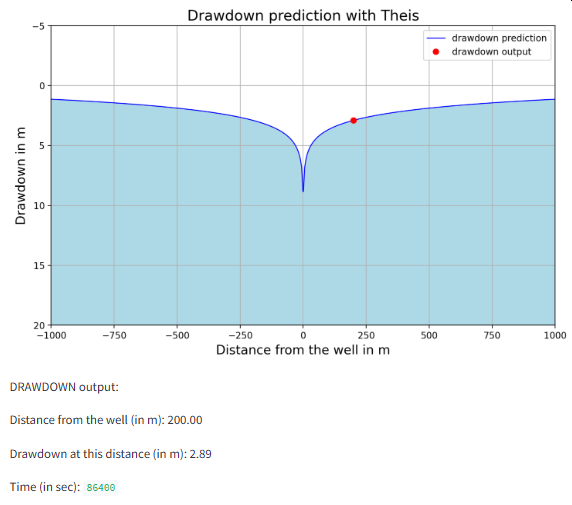
Figure 1: The computed drawdown after one day pumping from a confined aquifer. (Screenshot)
This interactive application illustrates transient radial flow toward a pumping well in a confined aquifer using the classical Theis solution. Users can explore how pumping rate, transmissivity, storativity, distance, and time control drawdown by adjusting parameters interactively. The app computes drawdown analytically and visualizes the resulting spatial drawdown distribution in real time, making it suitable for teaching and self-study of fundamental concepts in groundwater hydraulics and pumping-test interpretation.
| Detail | Value |
|---|---|
| URL | flow2well-transient-confine… · open app |
| Author(s) | Thomas Reimann (TU Dresden) |
| Keywords | Theis, confined aquifer, pumping, flow to well, drawdown |
| Fit For | self learning, online teaching, classroom teaching |
| Prerequisites | Basic hydrogeology, Aquifer parameters |
Streamlit app details
| Detail | Value |
|---|---|
| Interactive plots | 1 interactive plot(s) |
03-05-006Transient Flow towards wells and superposition
| Type: Streamlit app | Time: 15–30 minutes |
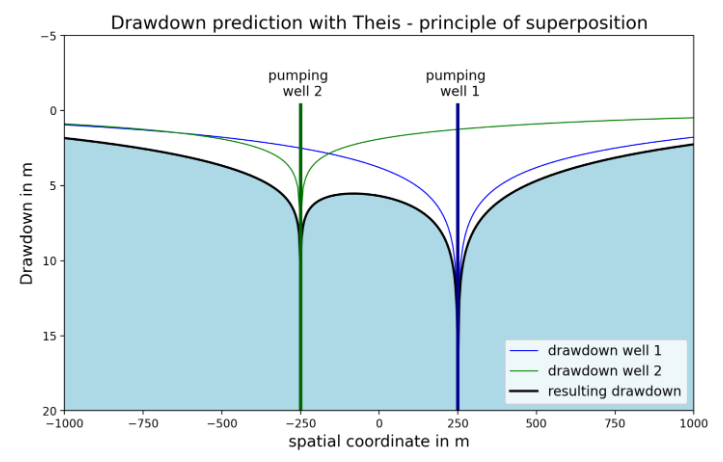
Figure 1: Computed drawdown for two pumping wells with different abstraction rates. (Screenshot)
| Detail | Value |
|---|---|
| URL | flow2well-transient-confine… · open app |
| Author(s) | Thomas Reimann (TU Dresden) |
| Keywords | Superposition, Theis, pumping test, infiltration well, imaginary well |
| Fit For | self learning, classroom teaching, online teaching |
| Prerequisites | Basic Hydrogeology, Flow to well, Theis |
Streamlit app details
| Detail | Value |
|---|---|
| Interactive plots | 1 interactive plot(s) |
03-05-007Water abstraction - Drawdown prediction with the Theis solution for confined and unconfined aquifers
| Type: Streamlit app | Time: 15–30 minutes |
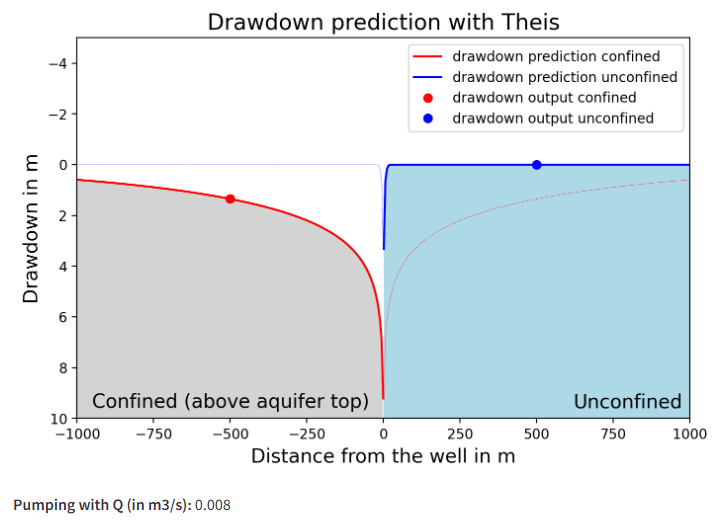
Figure 1: The drawdown plotted for confined and unconfined conditions for direct comparison (Screenshot)
This interactive app illustrates transient groundwater drawdown induced by pumping from a fully penetrating well. It is based on the classical Theis solution for confined aquifers and an adapted formulation for unconfined aquifers, allowing a direct comparison between both hydrogeological conditions. Users can explore how pumping rate, transmissivity, storativity (or specific yield), aquifer thickness, distance from the well, and time influence drawdown patterns. The app visualizes drawdown profiles symmetrically around the pumping well and highlights differences between confined and unconfined responses under otherwise identical conditions. The tool is designed for teaching and self-learning in hydrogeology, supporting conceptual understanding of radial flow to wells, parameter sensitivity, and the limitations of analytical solutions. It is particularly suited for undergraduate and graduate courses covering groundwater hydraulics, pumping tests, and aquifer characterization.
| Detail | Value |
|---|---|
| URL | flow2well-transient-unconfi… · open app |
| Author(s) | Thomas Reimann (TU Dresden) |
| Keywords | Wells, transient, Theis equation, confined, unconfined, flow to wells |
| Fit For | online teaching, classroom teaching |
| Prerequisites | Basic hydrogeology, Aquifer parameters, Aquifer characteristics |
Streamlit app details
| Detail | Value |
|---|---|
| Interactive plots | 1 interactive plot(s) |